"A Clean, Well-Lighted Place"
This is where my healing will continue

Once upon a time in a small-town Minnesota high school in the early 1980s, when teachers had more freedom to expose their students to the breadth and depth of the human experience, I first read Ernest Hemingway. Under the tutelage of Mr. Mayfield, I and the other twenty-some students in his classes delved into the literature of our cultural past, learning how it shaped our own realities. In those years I began to understand why I loved to read with voracious intent: literature helped me make sense of my life and my world.
To read the great novelists of the previous era did not corrupt my soul or wash away my morality; rather, I discovered how to shape my own views, sometimes rejecting with clarity and at other times accepting with affirmation the thinking of other great minds. As I grow older, I am ever more grateful for teachers who sometimes pushed the boundaries of conservative, small town morés so we students could see another way of life. We were never asked to accept another way of life, we were simply offered those opportunities to expand our minds and embrace diversity of thought.
Ernest Hemingway’s short story, “A Clean, Well-Lighted Place,” is even more relevant to me today than it was forty years ago in my American Literature class. It is set in a Spanish café early in the morning hours, a conversation between an older waiter and his younger colleague the bar tender, concerning an older, widowed patron who has little to live for, and who finds it hard to leave at closing time.
The young bar tender begins this conversational thread:
“I wish he would go home. I never get to bed before three o’clock. What kind of hour is that to go to bed?”
“He stays up late because he likes it.”
“He’s lonely. I’m not lonely. I have a wife waiting in bed for me.”
“He had a wife once too.”
“A wife would be no good to him now.”
“You can’t tell. He might be better with a wife.”1
I don’t need to spell out for you, grieving friends, why these words I first read at the age sixteen are now so poignant to me at sixty-one. Like the old man whiling away his time in the bar, I may appear to others as doing better than I am. When others speculate about another’s grief (I know this happens, because I have done it myself), they may not get it quite right. Truth be told, those of who grieve, may not have clarity of our own thought for some time to come. The fact is, when we are in grief, we “can’t tell” what might be better for ourselves.
One of the things we can identify, though, is the “place” where we intend to heal. This place may change or expand in time, but we grievers need to find someplace for healing to take place.
As the older, world-worn waiter and the younger, brash bar tender continue their end-of-shift conversation, the waiter speaks of liking to keep the café open late.
“Each night I am reluctant to close up because there may be someone who needs the café.”
“Hombre, there are bodegas open all night long.”
“You do not understand. This is a clean and pleasant café. It is well-lighted. The light is very good and also, now, there are shadows of the leaves.”2
I find the vision of the waiter illuminating and heartening. He understands the value of a “third place” in his patrons’ lives. Beyond their homes and their places of employment, his people need another place. This is a place to process the day, to relax in the presence of others, to find wholeness after a day fractured with responsibility and worry and distance.
I’ve never been much for bars, although cafés have a certain appeal for me. I have surprised myself in the past three months by the need I have to be in public places, even when I know no one around me. It might be a restaurant, or a coffee shop, an office waiting room, the library, even a grocery store. Because I am now alone in life, even as an introvert, I find a need to be among others. Mind you, I don’t need boisterous conversations or mind-numbing distractions or even recognition by others. I simply cannot always be alone and need to be amongst others regularly.
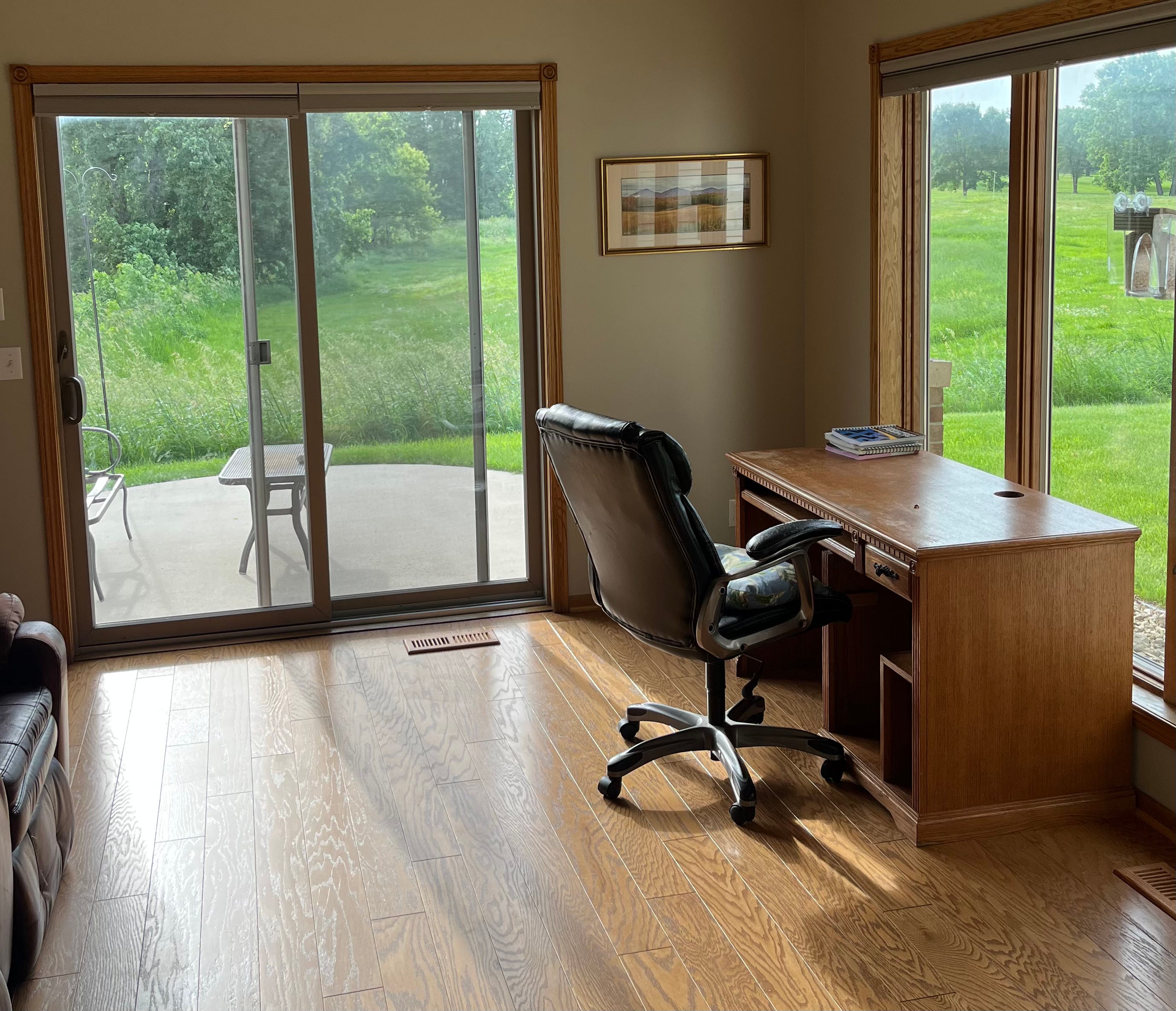
I love my new home and enjoy welcoming people to share my space with me from time to time. In this home I am blessed to inhabit, I need to be intentional about its space, and I need to identify my healing space. I wonder if this might be true of all grieving people. In my new home I have the luxury of both a sun room — which can be separated from the living and dining room area by pocket doors — and a home office — the third bedroom located on the second level. I have decided that the sun room will be my healing place, and the home office will be my working, industrious space.
In my sun room I will pray the Daily Office, I will read to sustain my soul and imagination, and I will write: notes to people I love, daily additions to my Substack, and thoughts in my Commonplace Book (more on that in a later Substack). I will furnish it to allow comfortable seating for a few other people so we can share conversation and life together in a clean, well-lighted place.
This is where my healing will continue. While I do not know the length of time, nor the eventual outcome of this process, at least I know where it will happen. There is much about grief I cannot control, but I can control this, and it will be the nexus for my continual stretch forward.
Grieving friends, find your healing space!
Ernest Hemingway, “A Clean, Well-Lighted Place” (1933).
Ibid.
What a wonderful Gift from God to be able to view his handywork, meditate on his word and heal all in one lovely place. When is your first Sunday in your new appointment? Have a blessed day.
You have a lovely "clean, well-lighted place"......❤️